
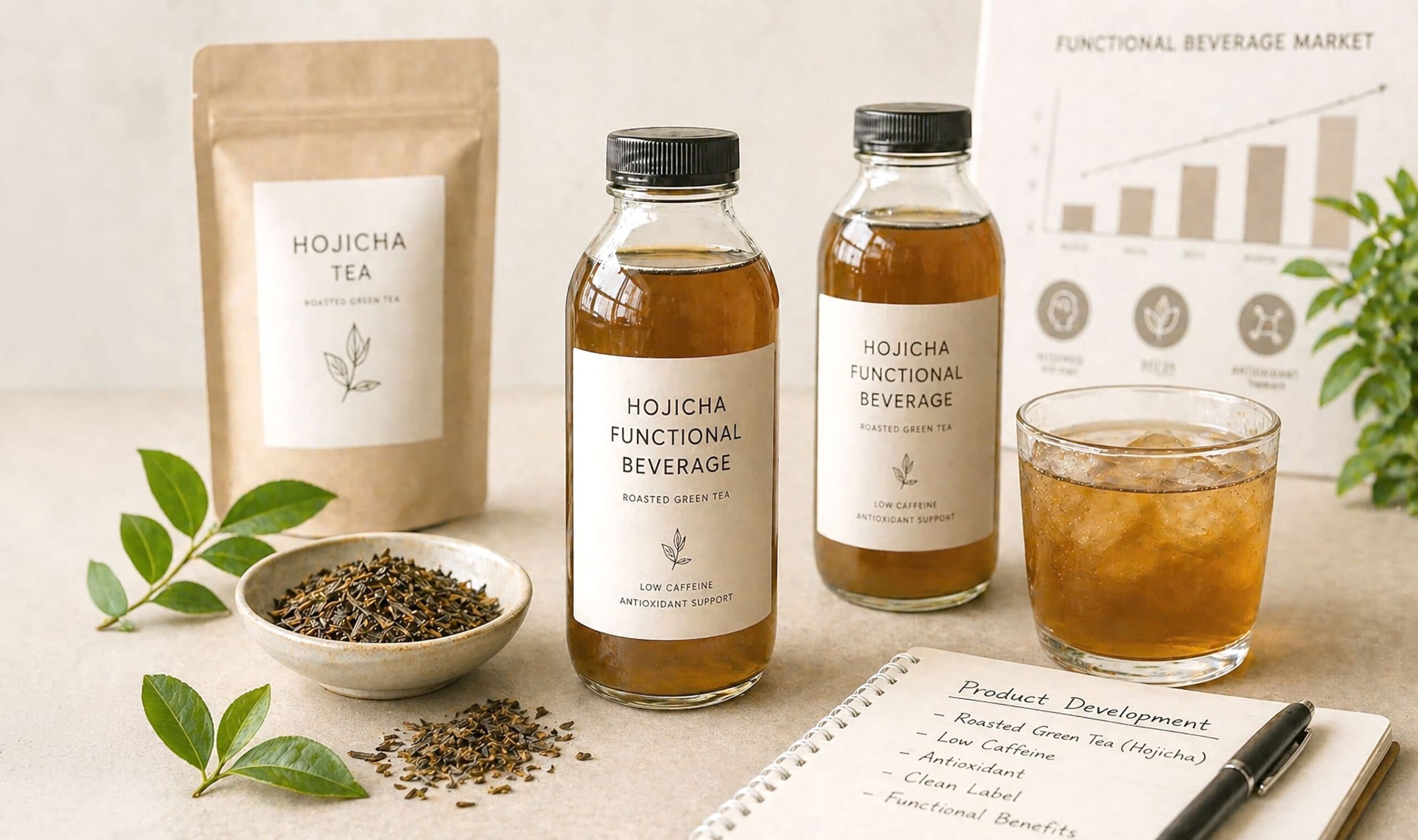
The global functional beverage market continues to expand rapidly, driven by increasing consumer interest in health, wellness, and natural ingredients. While ingredients like matcha and herbal extracts have long been associated with this category, hojicha is now emerging as a new and compelling option for product developers.
In this article, we explore why hojicha is gaining attention in the functional beverage market and how it can be utilized in product development.
One of hojicha’s most distinctive characteristics is its relatively low caffeine content compared to other green teas. This makes it suitable for a wider range of consumers, including those seeking evening beverages or reduced caffeine intake. This broader usability creates new opportunities in functional beverage categories focused on relaxation and balance.
As discussed in “Low-Caffeine Teas: Why Hojicha is a Perfect Evening Drink,” hojicha’s reduced caffeine content makes it suitable for a wider range of consumption occasions.
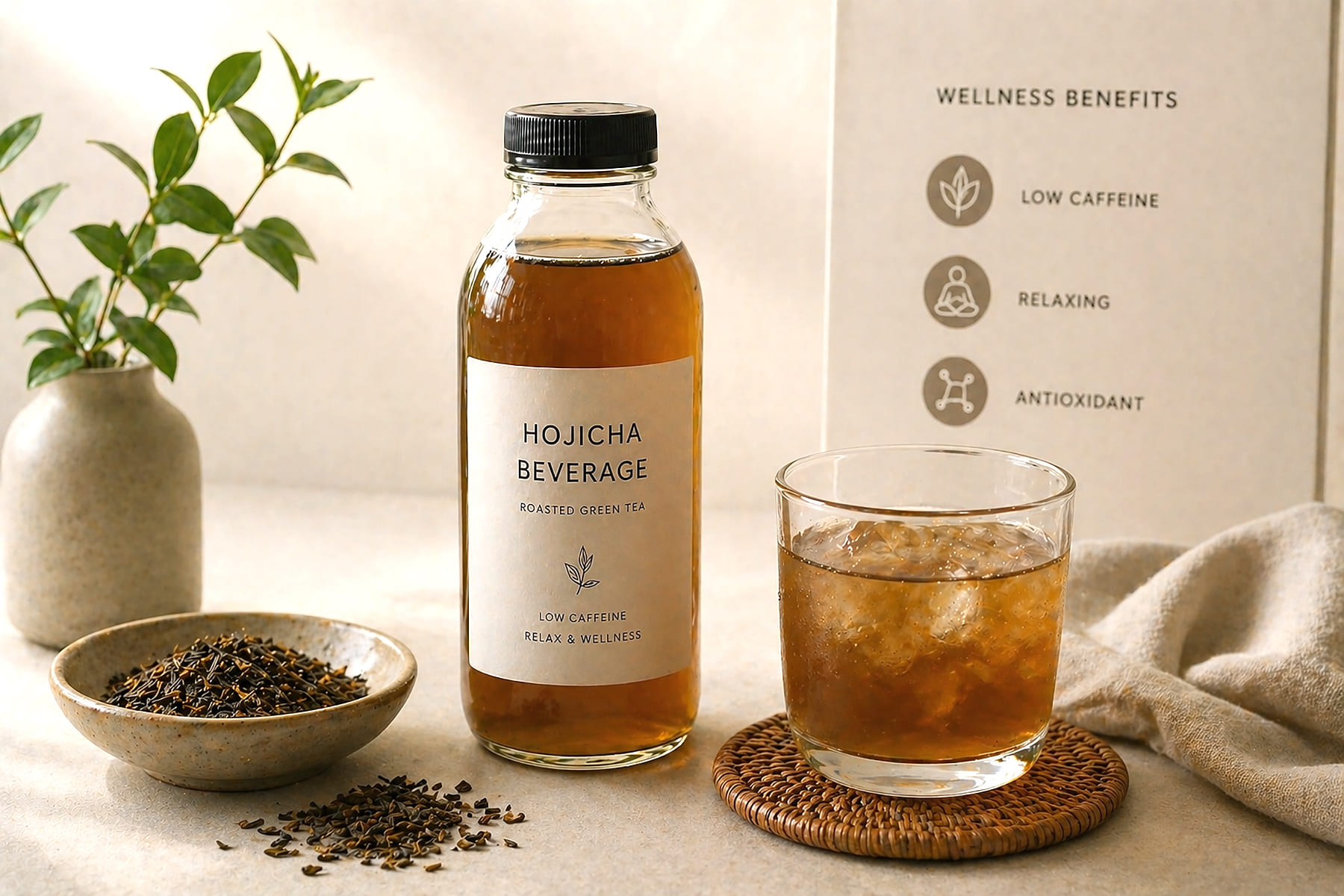
Hojicha’s roasted aroma and low bitterness make it highly approachable, even for consumers who are not familiar with traditional green tea flavors. This smooth flavor profile allows it to be used in a wide range of beverage formats without requiring significant modification or masking.
For more insights into flavor combinations, see our article “Flavor Pairing Strategies for Hojicha in Food and Beverage Applications.”
Modern consumers increasingly seek products that are perceived as natural, simple, and minimally processed. Hojicha aligns well with these expectations, offering a clean-label ingredient option that fits into wellness-focused product concepts. This makes it particularly suitable for beverages positioned around relaxation, balance, or daily wellness.
Its growing popularity is also supported by its perceived health benefits, as outlined in “9 Surprising Health Benefits of Hojicha: The Ultimate Guide to Japan’s Roasted Green Tea.”

Hojicha can be used across a wide variety of beverage formats, including lattes, ready-to-drink (RTD) beverages, and blended drinks. Its compatibility with milk, plant-based alternatives, and sweeteners allows for flexible product development. This versatility makes hojicha an attractive ingredient for brands looking to diversify their beverage portfolios.
Traditionally, hojicha has been associated with hot tea or dessert applications. However, its role is now expanding into modern beverage categories. As seen in cold brew developments such as those discussed in “Cold Brew Sencha: A Growing Opportunity in Functional Beverage Development,” tea ingredients are increasingly being adapted to new formats. Hojicha is following a similar trajectory, opening up new possibilities for innovation.
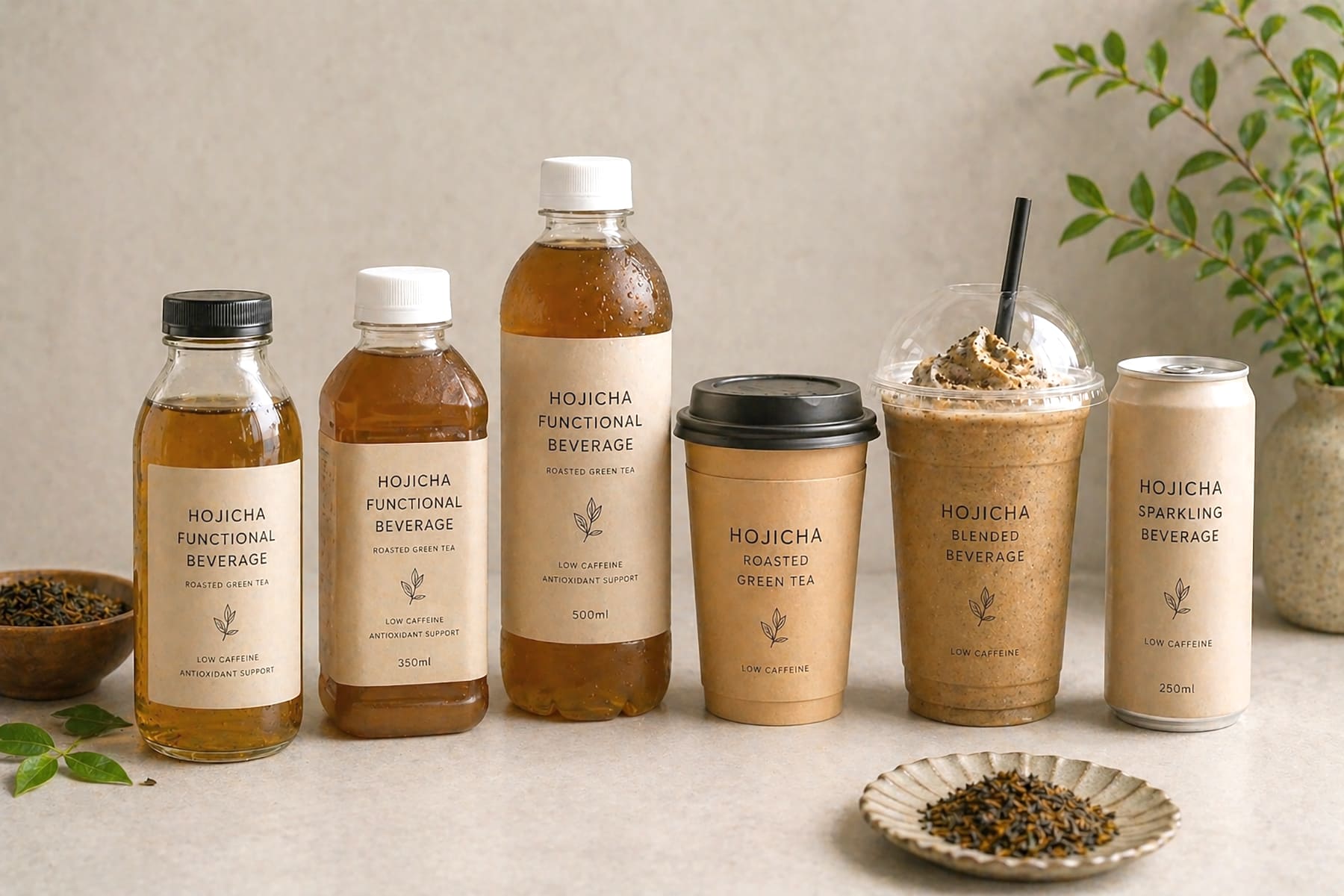
Hojicha is gaining attention in the functional beverage market due to its low caffeine content, approachable flavor, and alignment with wellness trends. Its versatility across beverage formats makes it a valuable ingredient for manufacturers looking to develop innovative and market-relevant products.
As the demand for functional beverages continues to grow, hojicha is expected to play an increasingly important role in shaping future product trends.


Articles providing insights into Japanese green tea and topics related to it.


