
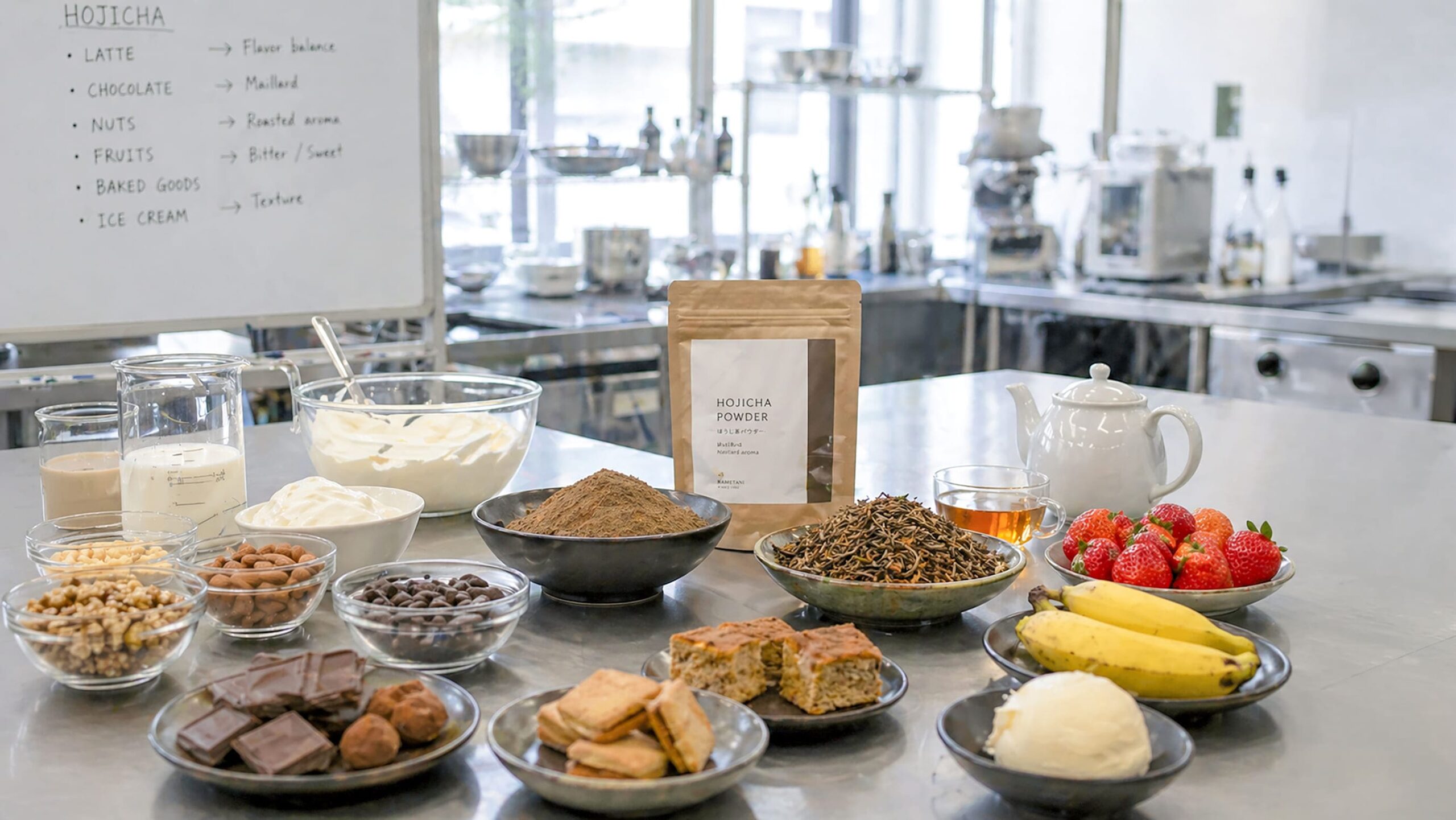
Hojicha has gained increasing attention in recent years due to its distinctive roasted aroma, low bitterness, and versatility across a wide range of food and beverage applications. For food manufacturers and product developers, understanding how to effectively pair hojicha with other ingredients is essential for creating products that stand out in both flavor and market appeal.
In this article, we explore practical flavor pairing strategies that can help unlock the full potential of hojicha in product development.
Hojicha is characterized by its roasted, warm, and slightly nutty flavor profile, with low astringency compared to other green teas. This makes it particularly suitable for pairing with both sweet and savory ingredients without overpowering them.
For a deeper look at how hojicha is used in product development, see our article “High-Quality Hojicha for Food and Beverage Development: Unlocking New Possibilities.”
Hojicha pairs exceptionally well with dairy products such as milk, cream, and butter. The roasted notes complement the richness of dairy, creating a smooth and well-balanced flavor profile. This combination is widely used in lattes, ice cream, and baked goods, where a subtle yet distinctive flavor is desired.
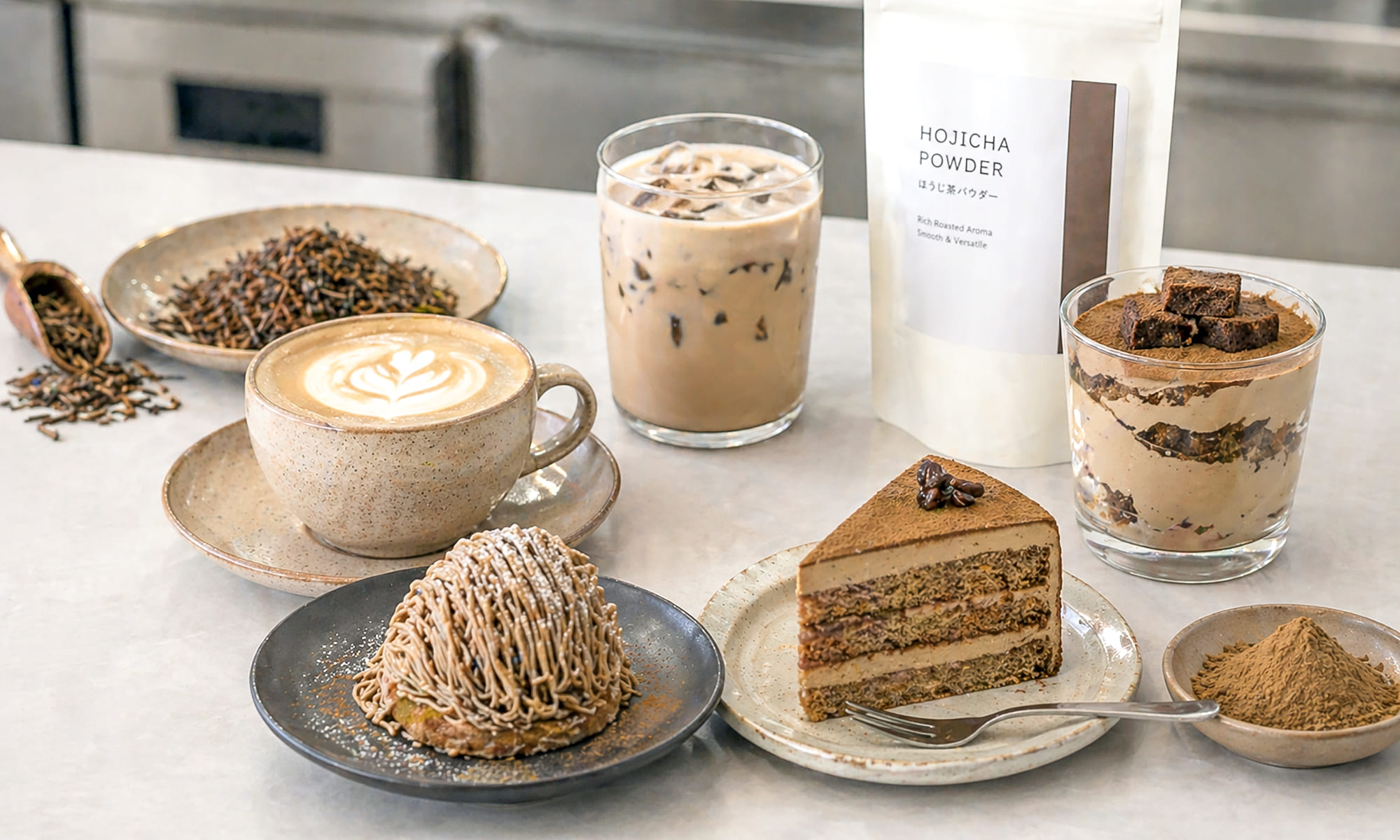
Hojicha works well with a variety of sweet ingredients, including chocolate, caramel, and sugar-based syrups. Its low bitterness allows it to blend smoothly without creating harsh contrasts. In particular, pairing hojicha with chocolate can create a layered flavor experience that combines roasted depth with sweetness.
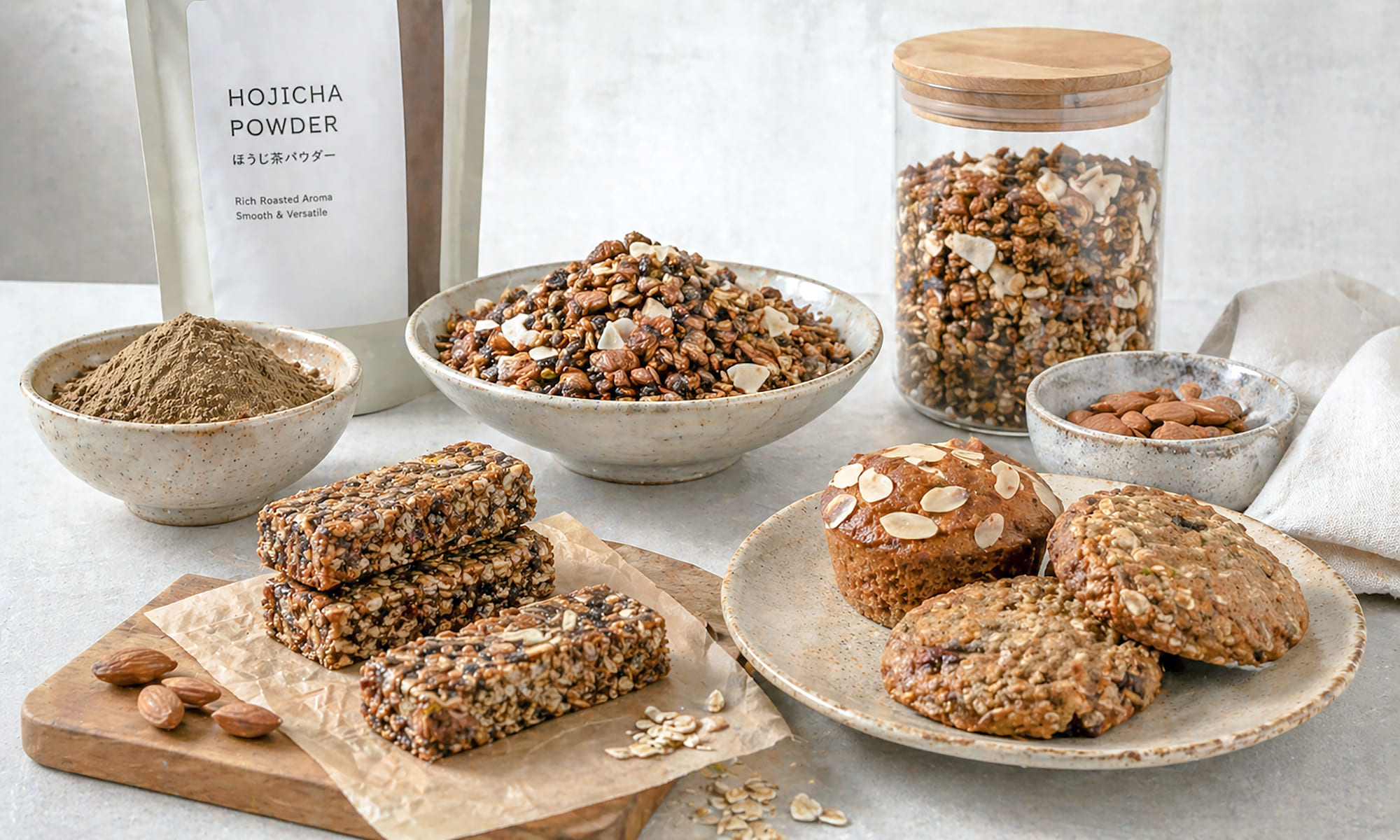
The naturally roasted character of hojicha makes it an ideal match for nuts and grains such as almonds, sesame, and oats. These combinations are commonly used in granola, snack bars, and bakery products, where a warm and comforting flavor profile is desirable.
Although hojicha is often associated with warm, roasted flavor profiles, it can also pair effectively with low-acidity fruits. Ingredients such as banana and pear complement hojicha’s smooth, nutty characteristics without overpowering its aroma.
These combinations are particularly suitable for beverage applications, including hojicha smoothies, blended drinks, and dairy-based formulations.
When developing products, it is important to consider not only individual ingredients but also the overall application. The ideal pairing for a beverage may differ significantly from that of a baked product. For example, in beverages, balance and smoothness are key, while in baked goods, flavor retention after heating becomes more important.

Hojicha’s versatility makes it a valuable ingredient for a wide range of food and beverage applications. By understanding its flavor profile and applying strategic pairing techniques, manufacturers can create products that are both distinctive and appealing to modern consumers.
As demand for innovative tea-based products continues to grow, mastering flavor pairing will be an important step toward successful product development.


Articles providing insights into Japanese green tea and topics related to it.


